Create Training Videos With AI: What Actually Works
The Short Answer: Best AI Tool for Training Videos
I gave five AI tools a week each to become a training-video machine. Most of them handed back a slideshow with subtitles, which is not a training video no matter how clean the transitions are.
The pick is GoLove.ai, and the reason is boring and decisive: continuity. A training scenario is multi-part by definition — setup, instruction, follow-up — and that only works if the same character shows up in clip two looking and sounding like she did in clip one. Most generators treat every render as a one-off. GoLove treats the character as the unit: she lives in chat, she has memory, you request a photo, that photo becomes a video, and the next scene starts from the same persona.
| Tool type | Same character across clips | Photo → video | Voice |
|---|---|---|---|
| Corporate avatar tools | Yes (stock avatar only) | No | Yes, scripted |
| Text-to-video generators | No | Sometimes | No |
| GoLove.ai | Yes, your own character | Yes, from chat | Yes, calls + messages |
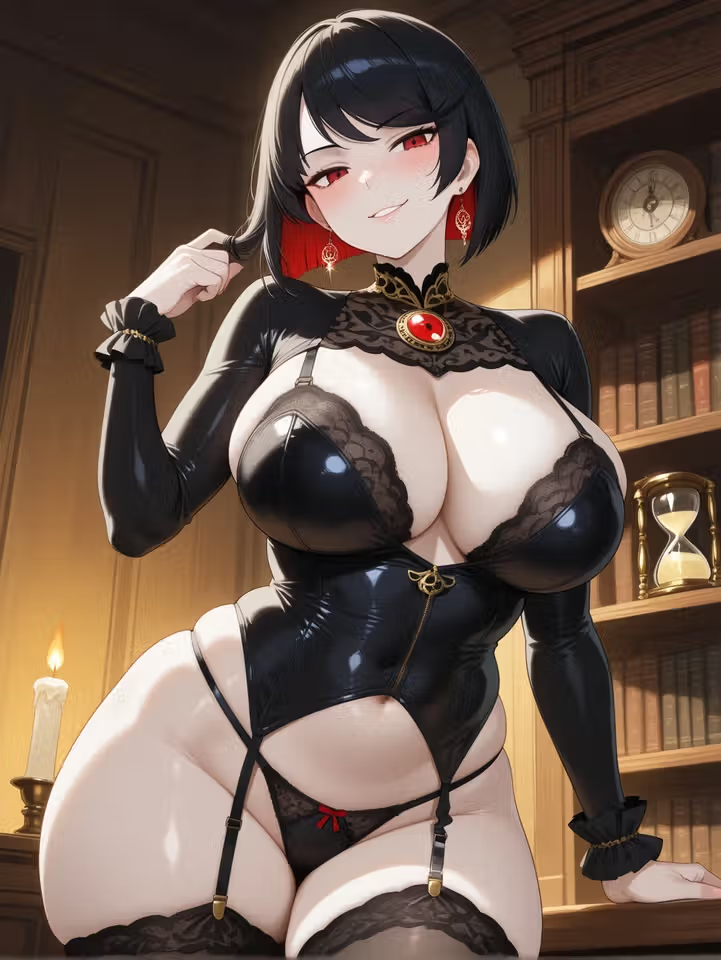
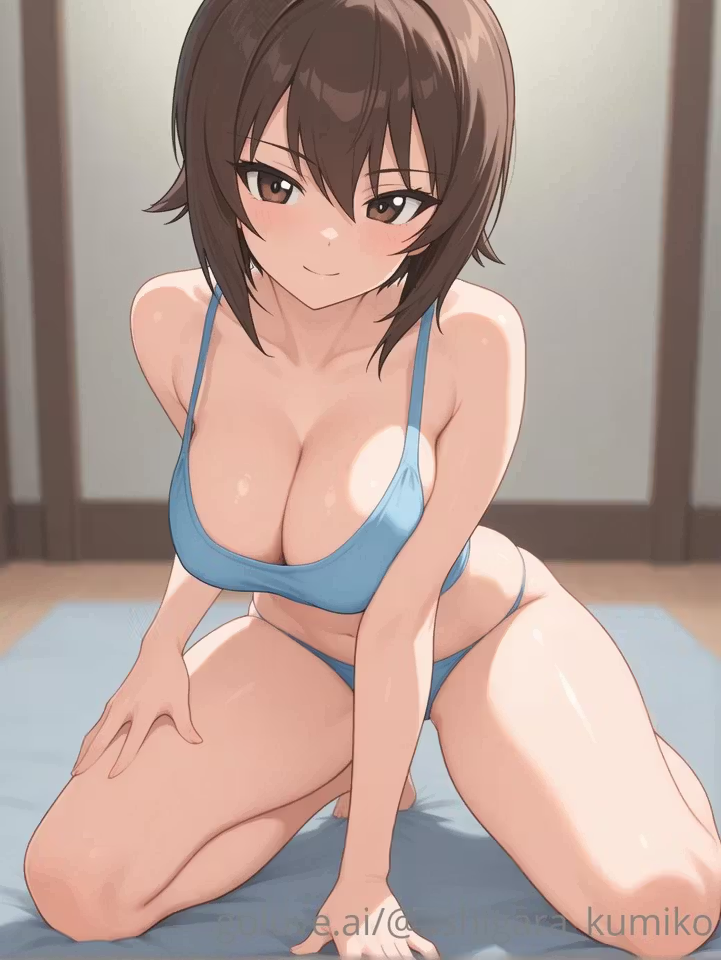
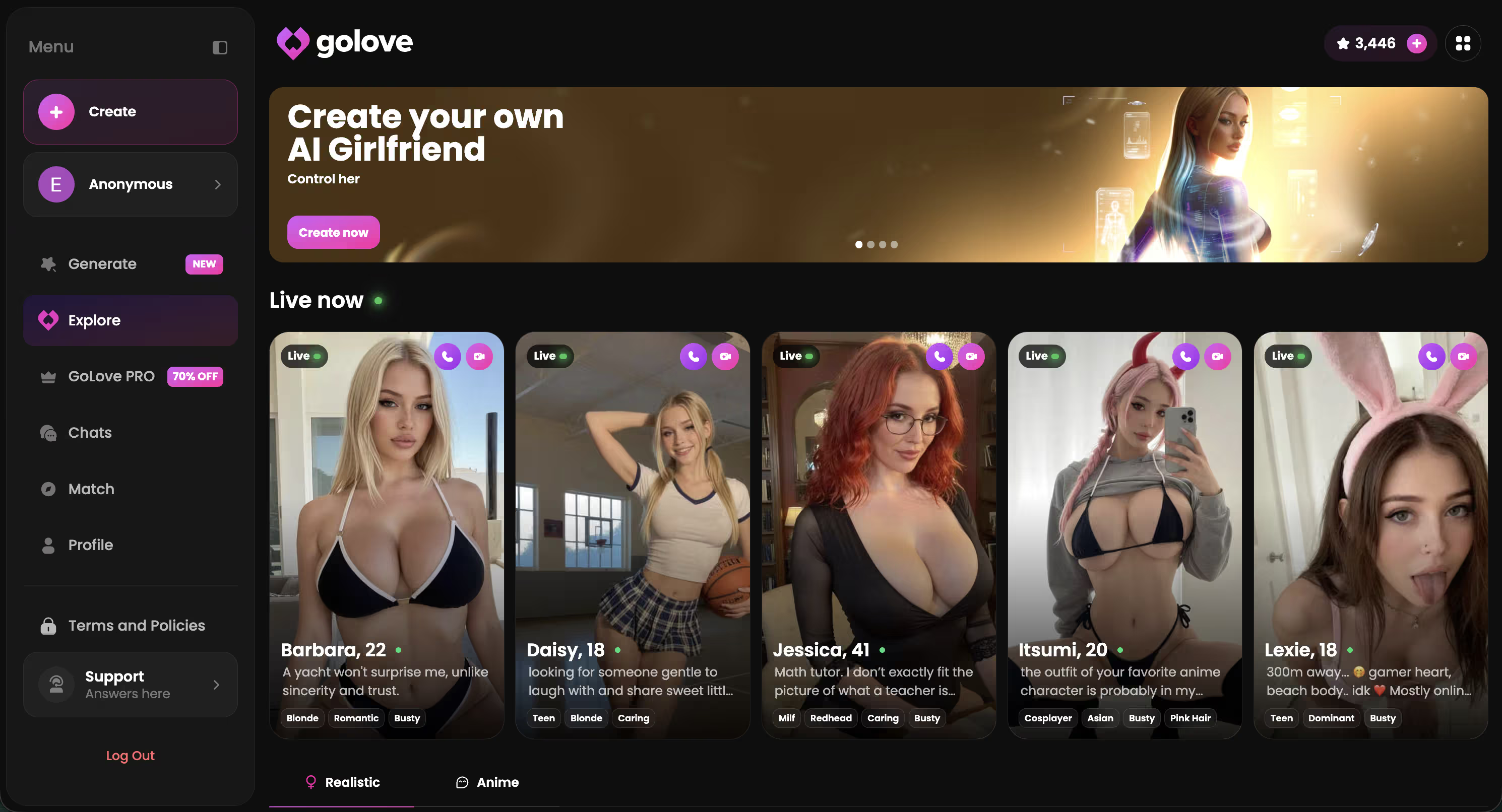
Want to know how stable a persona actually feels before you build anything on top of it? Start with the pre-made ones. Kaelin Voss reads as the composed professional who drops the act; Ashigara Kumiko is clipped and directive; Riko is all impatience. Three different instructional energies sitting on the same continuity engine.
Faces You Might Like
Tap any profile to open a chat


Pick one now and run a two-message exchange — inside a minute you'll know whether that voice is one you'd want narrating a scenario.
Five AI Video Tools, Head-to-Head
I scored five tools on the five things that decide whether you end up with a scenario or a pile of unrelated clips: custom character support, photo-to-video, voice, remixable output, and price sanity.
- Synthesia — the default answer for "make training videos online ai," and legit good at what it does: pick a stock presenter, paste a script, get a clean talking head. For anything roleplay-shaped it falls short instantly — the content policy stops you at the door, and the presenter is a rented face, not your character.
- HeyGen — better lip-sync, and the avatar cloning is genuinely impressive. Still the same corporate lane, though. Fair point in its favour: if your "training video" is literally onboarding, stop reading and go use this.
- Runway — the most cinematic output of the five, and the least controllable across shots. Same prompt, same seed discipline, and the face still drifted between clip one and clip three. One-off B-roll: no notes. Multi-part scenario: no.
- Pika — fast, cheap, fun for a single 4-second beat. Continuity isn't in the product at all; there's no persistent character object to reuse.
- GoLove.ai — the only one where the character is a first-class thing rather than a prompt. 76 realistic video modes as one-tap presets, plus 35 poses, 21 outfits and 34 backgrounds on the image side, all bound to a character you either designed yourself or picked from Explore.
Then there's remix, which nobody else offers: any clip in the feed opens the generator preloaded with that character and the exact settings that made it, so scene two starts from scene one instead of from scratch. That's the whole difference between a series and a slideshow.
My Week Actually Making Training Videos
The test was deliberately small. A three-part scenario — setup, instruction, follow-up — built five times, once per tool, same written brief each time.
So where did the template tools break? Not on render quality, which is what I expected. Clip one looked great. Clip two came back with a different jawline and noticeably shorter hair. Clip three, on Runway, was someone else entirely in similar clothes. Voice was worse: on the tools that offered narration at all, the delivery reset between renders, so my "instructor" went from measured to chirpy across a thirty-second gap. Progression is the entire point of a training format, and you can't build progression on that.
GoLove's run was less dramatic, and that's the compliment. I designed a character, talked to her in chat until the tone settled — lust level down at 2, response length up at 4, which reads as deliberate rather than breathless — then requested a photo in that same thread and converted it straight into video.
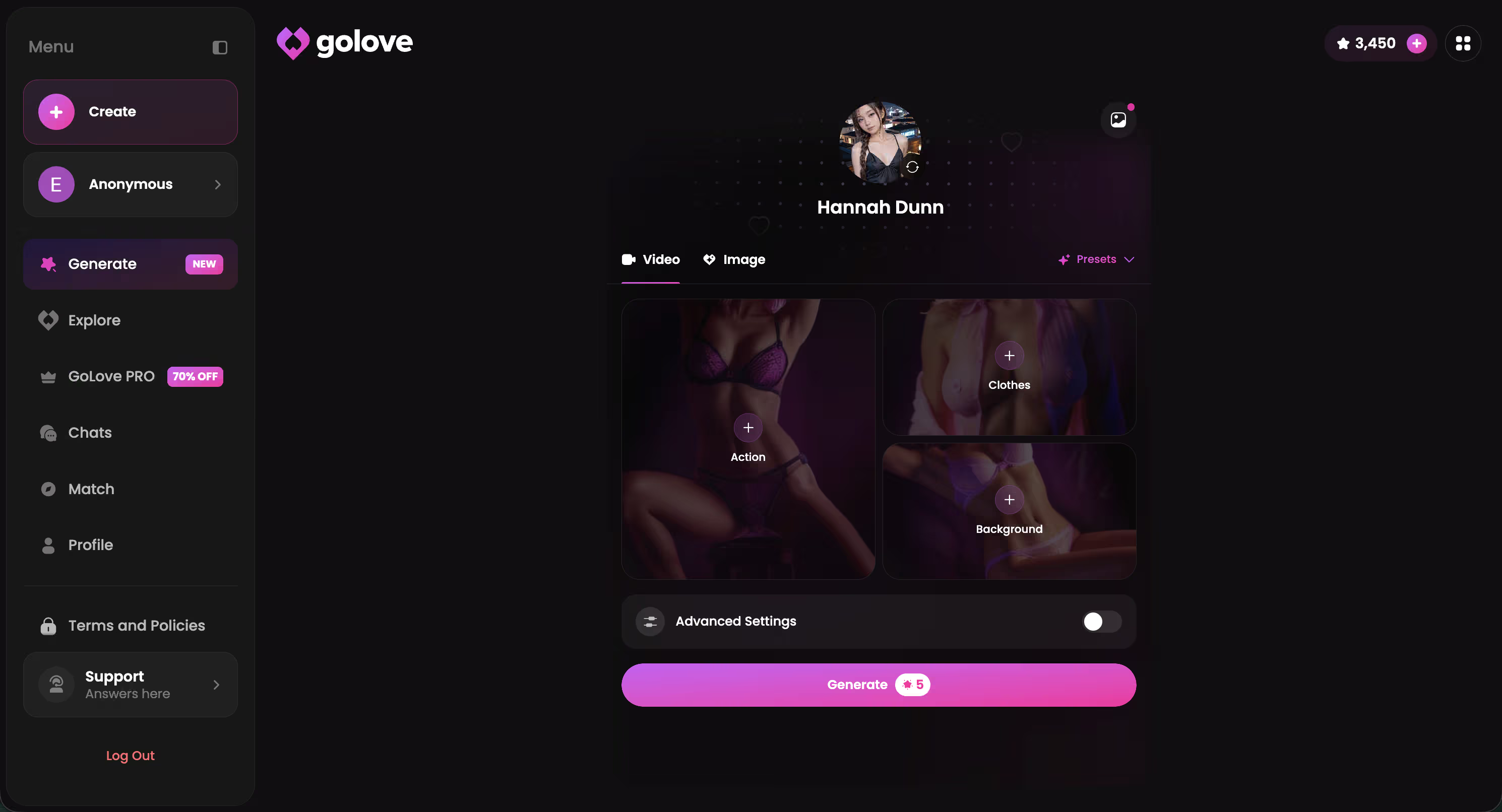
Scene two reused the same character avatar with a different action preset. Same face. Her voice held too, which I checked by calling her afterwards. The clips are short — I'll get to that — but across all three parts they were unmistakably one person, which is the thing the polished tools never managed once.
Building a Custom Character for Consistent Training Scenes
Here's the click path I'd repeat. Ten minutes, give or take, and every step feeds the next one.
- Create → pick Realistic (Anime and Trans are separate categories), or use Design with AI and describe the concept in plain text if you'd rather not fiddle with sliders.
- Chat settings → set the voice, then the lust level (1 sweet through 5 unfiltered) and response length (1 snappy through 5 immersive). Instructional tone actually gets decided right here — a 5/5 character narrates like she's in a scene, a 2/4 character narrates like she's running one.
- Talk to her for a few exchanges so memory has something to hold. She carries that history forward, and it's what makes scene three sound like a continuation rather than a restart.
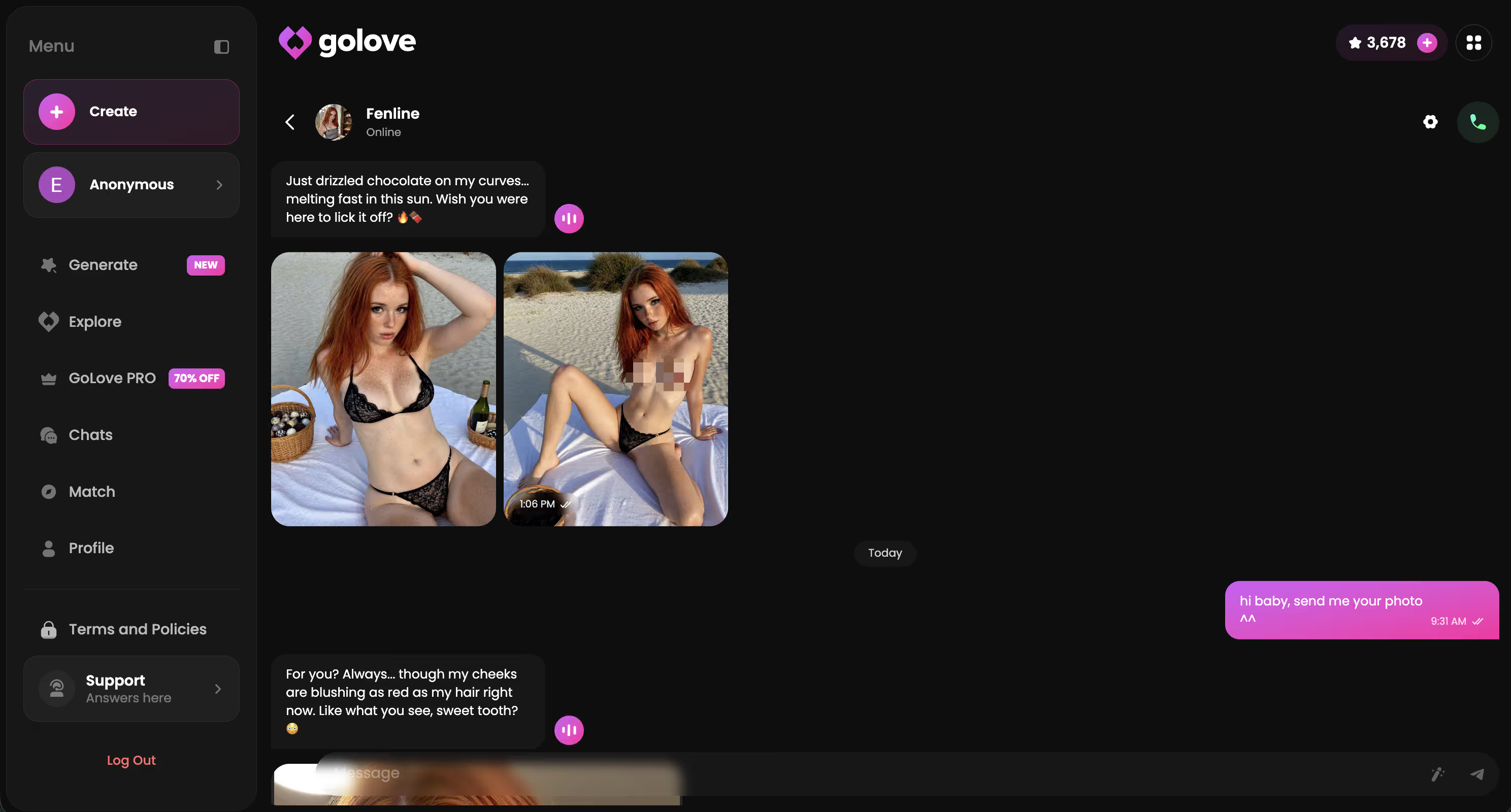
- Request a photo directly in chat — pose, outfit and background pickers sit right there (35 / 21 / 34 respectively), and you can batch 2, 4 or 8 images to pick the frame you want.
- Use Generate Video from Photo on that exact image, then choose an action preset. Same character, now moving.
- For scene two, reopen the generator with the same avatar selected. Nothing resets.
Step six is the proof point. The avatar swap lives top-right in the generator, and your custom character sits in that list permanently, so a scenario you start on Tuesday continues on Friday without any re-rolling.
Build the character before you spend a single Star on renders — the persona is the reusable asset, the clips are disposable.
GoLove.ai's Free Tier: Where the Limits Are
The free tier is real, not a demo trap. It's also shaped to run out.
- Chat is where free feels generous — conversation, memory and relationship progression weren't rationed in any way I hit during a week of daily use.
- Generation is where the ceiling sits. Images and videos both cost Stars, and Stars are the constraint. You get 2 free Stars per day for showing up, which is a top-up, not a budget. Building a three-part scenario in one sitting will outrun it.
- The Feed gives you a limited number of new videos per day on free; past that you hit an "Unlock Unlimited Feed" wall, and the style/gender/age filters are PRO-only.
On price: as of my last check (July 2026), PRO ran about $19.99/month, with an annual plan around $119.88/year — roughly $9.99/month — and Star packs spanning about $9.99 to $179.99 depending on size. Treat every one of those as approximate. Pricing genuinely varies by region (I've seen closer to $12.99 in some geos) and GoLove runs aggressive promo banners — a -70% upgrade banner was live in mid-July. So the number on your screen may not match the number on mine, and that's not a bug.
Honest read: free is enough to judge whether the character is right. It is not enough to produce a scenario. If you're building more than one scene, the annual plan is the only version of this that isn't a hard sell against your own wallet.
GoLove's Clip Length Caps for Longer Training Scenes
The thing I'd change — and it's the real cost of picking GoLove here — is that the video output is short-form. It's built off a feed-style clip model: one action, one preset, a beat rather than a segment. A genuine multi-step training scenario doesn't come out as one continuous video. It comes out as three or four clips you assemble yourself in whatever editor you already use.
Not fatal. Don't let anyone tell you it isn't work, though. Scene one, scene two, scene three, then a stitch pass. If you were hoping to type a brief and receive a finished five-minute instructional piece, GoLove will disappoint you — and so will everything else, but GoLove disappoints you later, after you've already got the character right.
What keeps me on it anyway: stitching four clips of the same character is a twenty-minute job. Stitching four clips of four slightly different women is an impossible one. Template tools give you polish per clip and chaos across clips, and I'd rather do the assembly by hand and have continuity handed to me than the reverse. Length caps are an editing problem. Character drift kills the project.
The Verdict: My Pick for AI Training Videos
GoLove.ai, for one reason: it's the only tool of the five where the character persists across chat, photo and video, and a training scenario is nothing without that.
Who's this for? Anyone building multi-part instructional or roleplay content with no actors and no studio, who has already noticed that the corporate avatar tools won't touch the subject matter and the cinematic generators won't hold a face for two clips running. If your project is a single standalone render, Runway will look better and I'd tell you to use it. If it's a series, that advantage is gone by clip two.
Continuity beat polish in my week of testing, and it wasn't close. The clips I finished with weren't the prettiest frames I generated — they were the only ones that added up to a scenario.
Start with the character, not the clip. Design her, set the voice and response length, run a short chat so memory has something to work with, then take that first photo into video from the same thread — everything after that is repetition, and repetition is where this format finally pays off.
See also: AI Girlfriend That Sends Videos, Create Your Own AI Girlfriend and AI Girlfriend App Android.
Frequently Asked Questions
Related Articles
ComfyUI NSFW: What Actually Works in 2026
ComfyUI NSFW setups give total control, but GoLove.ai wins on memory and in-chat photos — no GPU, no node graphs. See the honest 2026 verdict.
Hentai Image Board: What Actually Works in 2026
Hentai image board sites recycle old uploads — GoLove.ai generates custom photos and videos of your exact fantasy. See why it wins below.
Createhentai: What Actually Works in 2026
Createhentai tools give one static image — GoLove.ai wins with chat memory, custom anime characters & photo-to-video. Explore, instant-access.

AI Generated Slut: What Actually Works in 2026
AI generated slut searches usually want an ongoing character, not one image — GoLove.ai remembers you and sends real photos. See how.
This article contains affiliate links. We may earn a commission at no extra cost to you if you sign up through our links. See how we test.